Choosing the right foam can make a huge difference in your cosplay project. Whether you're creating lightweight armour, oversized weapons, intricate accessories or soft costume details, the material you choose affects the final shape, durability, flexibility and finish of your build.
If you're new to cosplay crafting, the variety of foam thicknesses and materials can feel overwhelming. Should you use 2mm, 5mm or 10mm EVA foam? When is thicker foam better? And when should you choose Foam Clay instead?
At Cosplay Store Greece, we work with cosplay materials every day, and one of the most useful things you can learn is that there is no single foam that works for every project. The secret is choosing the right material for the job.
In this guide, we'll explain the most common EVA foam thicknesses, what each one is best for, and how to combine them to create professional-looking cosplay pieces.
1. Understanding EVA Foam
EVA foam (ethylene-vinyl acetate) is one of the most popular materials in cosplay and prop making. It is lightweight, easy to cut, can be shaped with heat, and works well for creating armour, props, accessories and costume details.
It is available in different thicknesses, densities and finishes. For most cosplay projects, the thickness is one of the first things to consider.
A useful rule of thumb is:
Thin foam is best for flexible details, small shapes and surface decoration.
Medium foam is ideal for most armour pieces and general construction.
Thick foam is useful for large forms, structural shapes and chunky props.
Let's look at the most common options.
2. Which EVA Foam Thickness Should You Use?
2mm EVA Foam – Fine Details and Flexible Layers
If you need fine details without adding unnecessary bulk, 2mm EVA foam is an excellent choice.
Because it is thin and flexible, it works well for surface decorations, layered designs and small costume elements that need to follow the shape of the underlying piece.
Best uses:
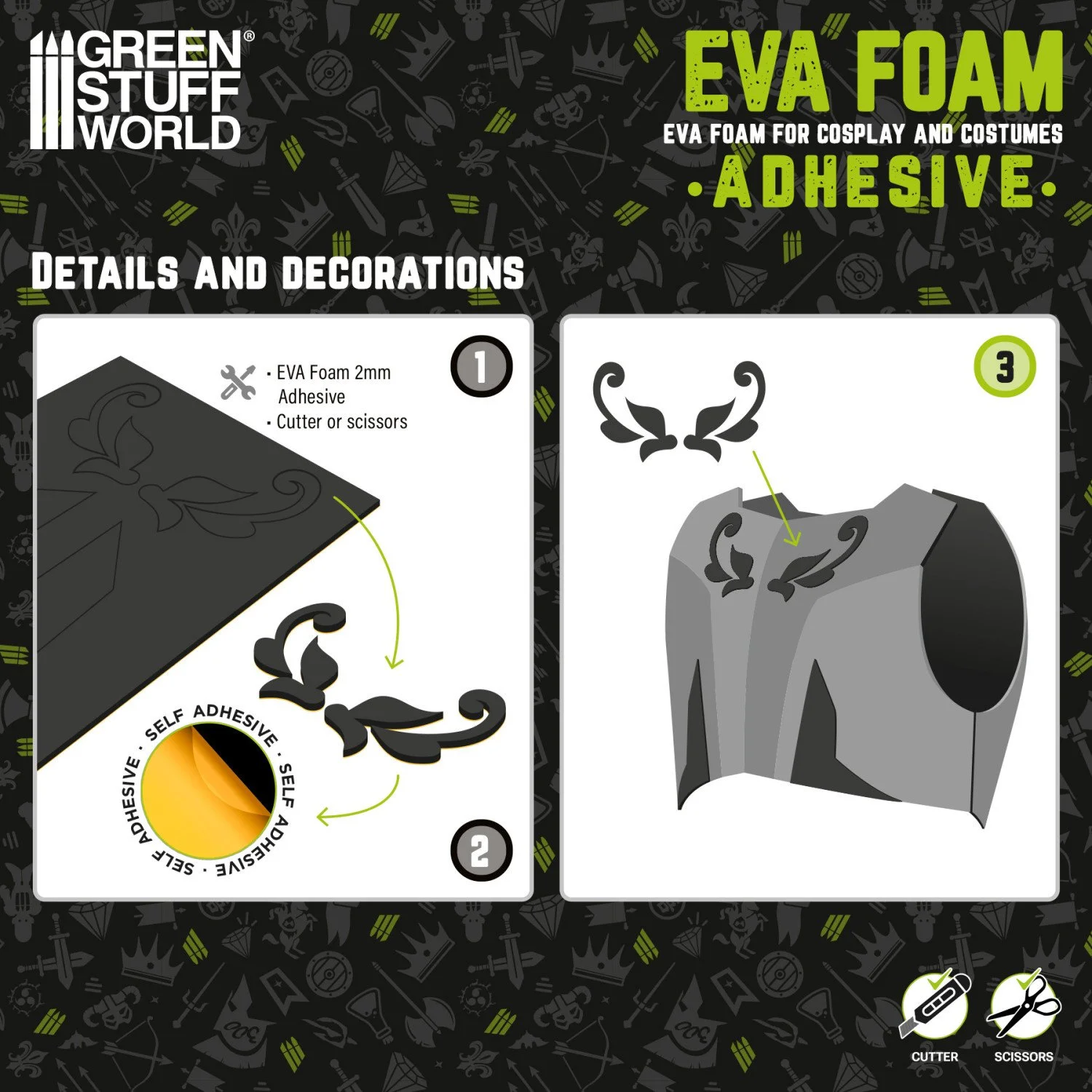
Armour engravings and decorative overlays
Thin trim and edging
Belts, straps and small accessories
Layered patterns and surface details
Flexible costume elements
Adding fine details to larger armour pieces
Why choose it?
Thin foam is easier to cut into intricate shapes and can be layered over thicker foam to create depth. It is especially useful when your design includes several overlapping plates or decorative borders.
Keep in mind: 2mm foam is generally too thin to provide structure on its own for large armour plates or heavy props.
Our tip: Use 2mm EVA foam for the decorative details, then combine it with 5mm or 10mm foam for the main body of your armour.
5mm EVA Foam – The All-Rounder
If you're unsure which thickness to buy first, 5mm EVA foam is often the most versatile starting point.
It offers a useful balance between flexibility, thickness and structure, making it suitable for many different types of cosplay builds.
Best uses:
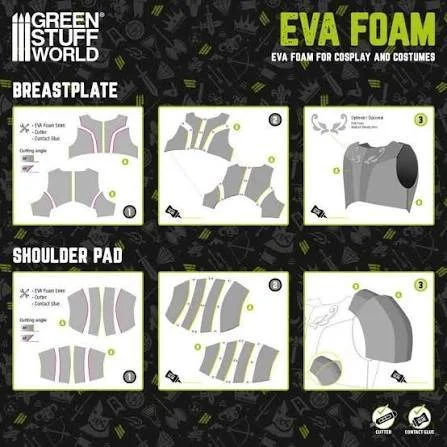
Chest armour and shoulder plates
Bracers and forearm armour
Shin guards and leg armour
Masks and helmets, depending on the design
Lightweight shields
Medium-sized props
Layered armour construction
Why choose it?
5mm foam is thick enough to hold many armour shapes while remaining manageable to cut, heat-shape and glue. It is also a great base material for patterns that require curved surfaces.
For more complex builds, you can layer multiple pieces together to create raised sections, bevelled edges and additional depth.
Keep in mind: Large, flat pieces may need additional shaping, layering or internal support to maintain their form.
Our tip: If you're building your first EVA foam armour, start by testing your pattern with inexpensive templates before cutting your final material.
10mm EVA Foam – Volume and Structure
When your project needs depth, thickness or a more substantial appearance, 10mm EVA foam is a great option.
It is particularly useful for oversized costume elements and props that need to look bulky without becoming unnecessarily heavy.
Best uses:
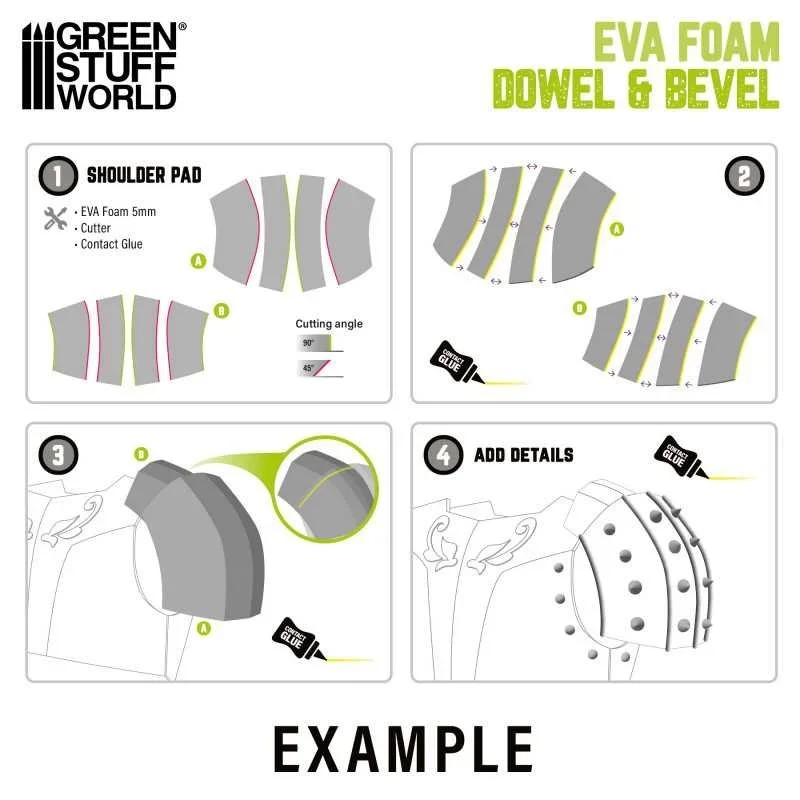
Large shoulder armour
Chunky gauntlets and bracers
Oversized weapons and hammer heads
Shields and large armour sections
Raised armour details
Thick soles or costume components, where suitable
Building up volume in larger props
Why choose it?
Thicker foam provides more material to carve, bevel and shape. It is ideal when you want a bold silhouette or need to create a solid-looking piece without building it entirely from many thin layers.
You can also combine it with thinner foam to create more realistic layered armour.
Keep in mind: Thick foam takes more effort to cut cleanly, especially when creating angled edges. It may also require more heat and careful shaping to achieve curves.
Our tip: For a large prop, consider using 10mm foam for the main volume and 2mm foam for decorative details. This combination creates depth without making every part of the build bulky.
25mm EVA Foam – Large Shapes and Carving
For projects that require substantial volume, 25mm EVA foam can be useful for building large shapes that would otherwise require many layers.
Best uses:
Oversized prop heads and chunky forms
Large decorative elements
Carved shapes and sculptural details
Thick costume components
Building up volume in large props
Why choose it?
A thick sheet gives you more material to carve, shape and sand into a three-dimensional form. It can save time when creating bulky pieces that would otherwise require multiple layers of thinner foam.
Keep in mind: 25mm foam is not automatically stronger or more rigid than every thinner foam. The result depends on the foam's density, construction and the shape of your design. Large pieces may still require internal reinforcement.
Our tip: Sketch your shape from several angles before cutting. Removing material is easy; adding it back is not!
3. Quick Comparison: Which Thickness Is Right for You?
Foam thicknessBest forTypical examples2mmFine details and overlaysTrim, engravings, decorative layers5mmGeneral constructionBracers, chest plates, shoulder armour10mmVolume and chunky shapesLarge armour, shields, oversized weapons25mmLarge forms and carvingProp heads, sculptural pieces, thick details
These are starting points rather than strict rules. Your design, foam density, pattern and required flexibility will all affect the best choice.
4. Can You Combine Different Foam Thicknesses?
Absolutely! In fact, combining thicknesses is one of the easiest ways to make a cosplay build look more detailed and dimensional.
Imagine you're making a fantasy shoulder plate:
Use 5mm EVA foam for the main armour shape.
Add 10mm EVA foam where you need raised sections or extra volume.
Use 2mm EVA foam for decorative borders, symbols and surface details.
This approach helps create visual depth without making the entire piece unnecessarily thick.
You can use the same principle for helmets, shields, gauntlets, belts, weapons and many other props.
5. What About Foam Clay?
EVA foam is excellent for constructing the main shapes of your project, but it can be more challenging when you need organic curves, small sculpted details or irregular textures.
This is where Foam Clay can help.
Foam Clay is a mouldable, air-drying material used to create raised details and sculpted forms on cosplay pieces. It can be particularly useful for adding texture or filling areas where flat foam layers would be difficult to work with.
Best uses:
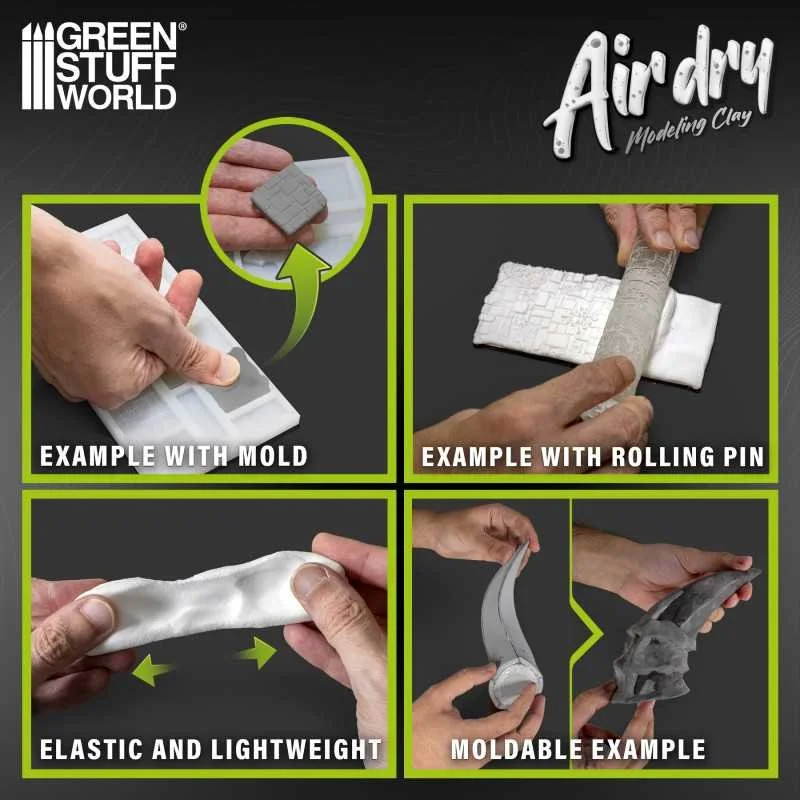
Organic shapes and sculpted details
Raised decorative patterns
Textures and irregular surfaces
Small ornamental elements
Filling and refining certain transitions between foam pieces
Unlike sheet EVA foam, Foam Clay is shaped by hand rather than cut from a flat sheet.
Important: Foam Clay is not a direct replacement for structural EVA foam. For large armour pieces, use EVA foam as the base and Foam Clay for the details. Allow the clay to dry fully and test your primer and paint system on a sample before finishing the entire piece.
6. EVA Foam vs. Foam Clay: Which Should You Choose?
FeatureEVA foam sheetsFoam ClayMain purposeConstruction and shapingSculpting and detailingCommon projectsArmour, weapons, shieldsTextures, ornaments, organic detailsHow you shape itCutting, gluing and heat-shapingMoulding by handBest for large flat surfacesYesGenerally noBest for irregular sculpted detailsPossible, but may require layeringYesUseful for beginnersYesYes, especially for details
For many projects, the best results come from using both materials together.
7. What If You Need Something More Flexible?
Not every costume component needs to behave like armour. Some designs require soft, flexible pieces that move with your body.
For these areas, consider the flexibility of the material and how the finished piece will be worn.
Thin EVA foam can work for lightweight decorative layers and some flexible components, but it is not a substitute for fabric or stretch materials in every application.
For areas that bend frequently, test a small sample before committing to the full project. The finish, adhesive and paint you apply can also affect how well the piece tolerates repeated bending.
8. How to Choose Foam for Your First Cosplay
If this is your first foam project, don't feel that you need to purchase every thickness immediately.
Start with the design and divide it into three categories:
Main structure: What forms the overall shape? This is often 5mm foam for medium armour, or 10mm foam for thicker components.
Raised sections: Where do you need additional depth or volume? Consider 10mm foam or layered sheets.
Fine details: What adds decoration and visual complexity? This is where 2mm foam can be especially useful.
If your project includes sculpted ornaments or irregular details, you can add Foam Clay to your material list.
Before starting the final build, make a small test piece. Practise cutting, gluing, heat-shaping and finishing the foam. This will help you understand how the material behaves and reduce mistakes on the finished costume.
9. Don't Forget Your Finishing Materials
Choosing the correct foam is only part of the process. The way you prepare and finish it has a major impact on the final appearance.
Depending on your project, you may also need:
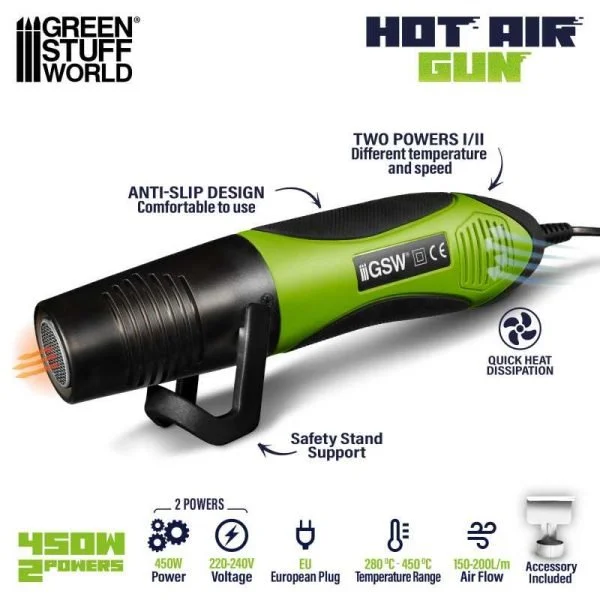
A sharp craft knife and replacement blades
A suitable adhesive for EVA foam
A compatible primer or foam sealer
Acrylic paints or suitable flexible coatings
Sanding tools for refining edges
Always follow the safety instructions for your tools, adhesives and coatings. Work in a well-ventilated area when required, and use appropriate protection when cutting, heating or sanding materials.
10. Find the Right Foam for Your Next Project
Every cosplay project is different, and choosing the right thickness from the beginning can save you time, material and frustration.
For fine details and overlays, start with 2mm EVA foam. For versatile armour construction, consider 5mm. When you need more volume, explore 10mm or 25mm foam. And if your design calls for sculpted ornaments or organic textures, Foam Clay can be a useful addition.
The most important thing is to match the material to the job rather than forcing one thickness to do everything.
Ready to start your next build?
Explore the cosplay materials available at Cosplay Store Greece and choose the foam that fits your design, whether you're creating your first set of armour, an elaborate fantasy costume or an oversized prop.
Not sure which thickness is right for your project? Contact us with a reference image and a short description of what you're making, and we'll help you choose a suitable material.
